
Safety and quality
Safety and quality on live streets
Our work is in footpaths and roads that people are using, around cables and pipes that are live. These are the controls we use, and the records that show they were used.
Planning and briefing
- A company safety statement, and a separate risk assessment and method statement for each activity, such as civils and column installation.
- Method statements go to the main contractor for review before work starts.
- Crews are briefed on the method statement before work starts, and each person signs the briefing record.
- Before a street starts, we walk the route with the road authority and the main contractor to agree the dig line and reinstatement extent.
Competence
- Everyone on site must hold a current SOLAS Safe Pass and manual handling training.
- Plant is operated only by people holding the CSCS card for that machine. Signing, lighting and guarding is set out by card holders.
- Individual tickets held across our crews include Location of Underground Services, Road Opening and Reinstatement, Abrasive Wheels, First Aid Response and Vehicle Mounted Crane.
- On fibre and telecoms networks, crews complete the network operator’s inductions and competency assessments.
- Certificates are kept in a dated register, with expiry dates taken from the certificate itself.
These are qualifications held by individual people, not company certifications.
Work around buried services
- The service drawings for each job are kept with the road-opening licence in the site folder.
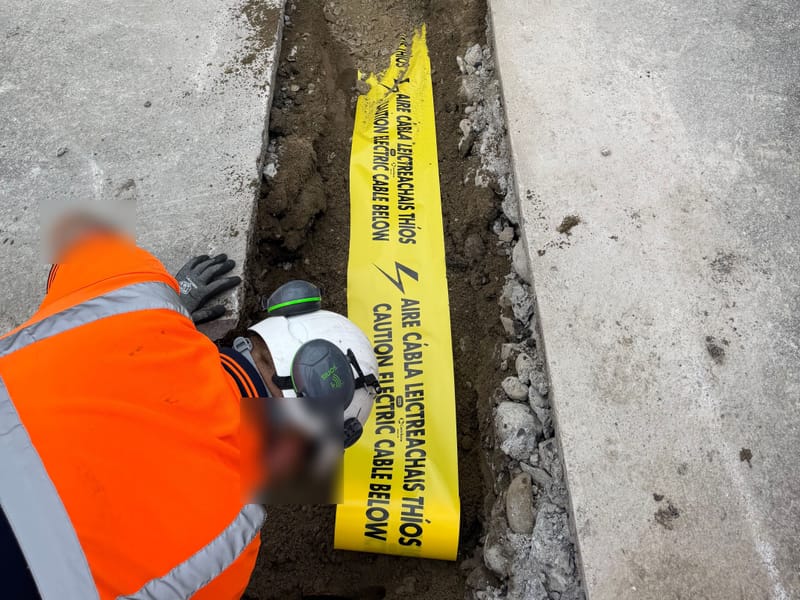
- Before excavation, the dig line is scanned with a cable locator and signal generator.
- Close to a known service, we expose it by hand digging or vacuum excavation, with a spotter.
- Service strikes and near misses are reported to the main contractor and recorded. What we learn goes into the method statement and the next briefing.
Public access and traffic management
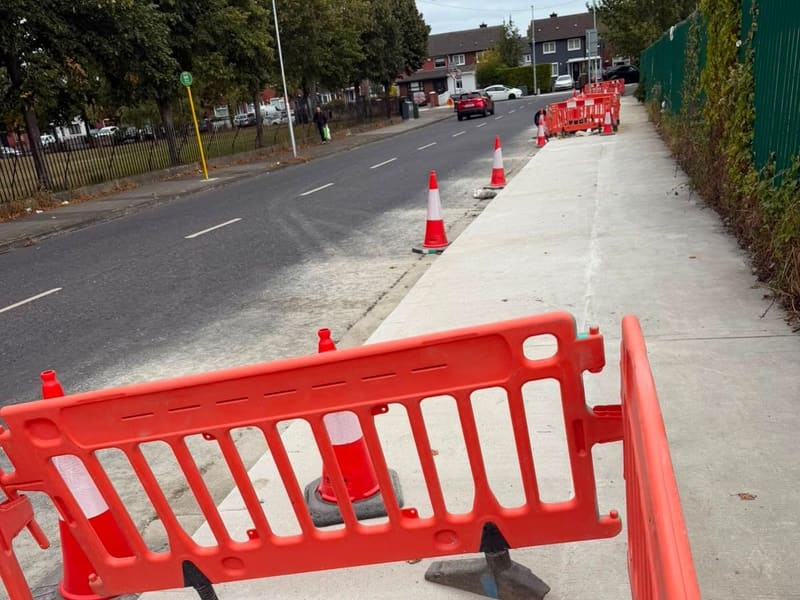
- Each job has a temporary traffic management plan to Chapter 8 of the Traffic Signs Manual, including the route for pedestrians.
- Each job has a named traffic-management competent person.
- We keep to the hours and conditions in the road-opening licence, and give the road authority written notice before each start.
- Every opening is reinstated or plated before the working window closes.
Plant and equipment
- The operator checks each item of plant before use every day and reports defects straight away.
- Plant is inspected weekly by a competent person, on a written record kept on site.
- Lifting equipment has its statutory thorough examination by an external examiner, and the report is kept on file.
- A spill kit is carried wherever refuelling takes place.
Inspection and reinstatement checks
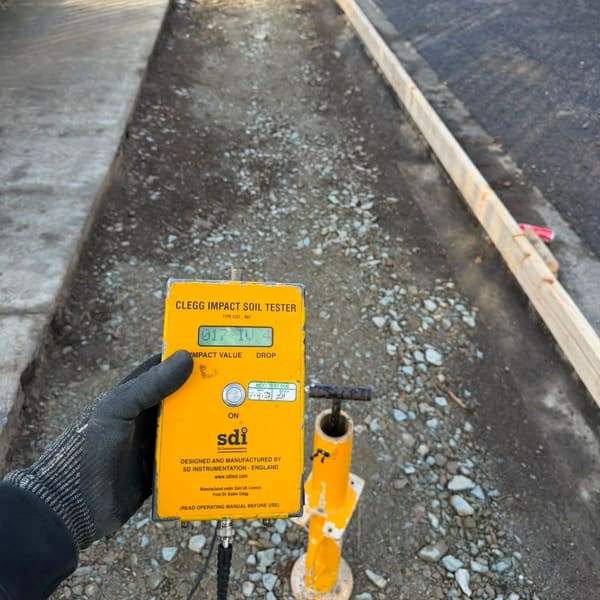
- Backfill compaction is checked with a Clegg impact tester, and the reading is photographed.
- Each reinstatement is measured and photographed when complete.
- Defects such as cracking are recorded against the location, put right and photographed again.
Records and handover
Each location is recorded as its own job while the work is open. Records are checked before they are issued and handed over to the main contractor with our valuations.
Location record
One per location
- Before work
- Existing condition
- Any damage already present
- During work
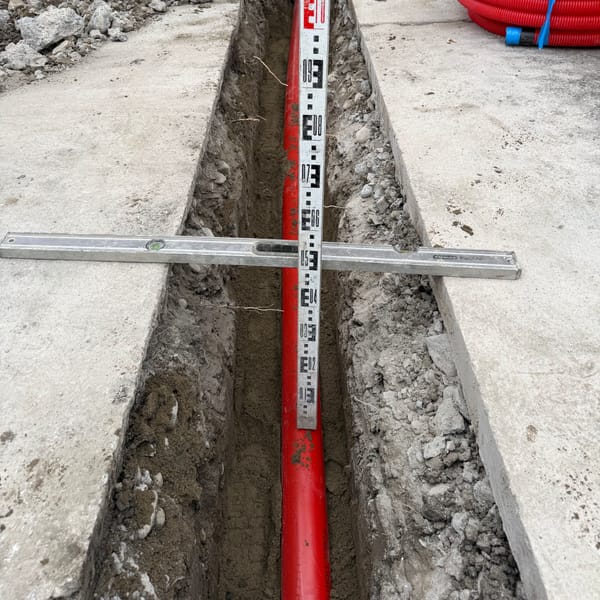
- Excavation depth
- Backfill and compaction
- Clegg impact test readings
- At completion
- Finished surface
- Defects closed out with photographs
- Measured
- Breakout and reinstatement by surface type
- Duct lengths by surface type
Checked before issue and handed over with our valuations.
Site safety folder
Every crew van carries a folder for the job with:
- Safety statement
- Method statements for the work
- Plant certificates and thorough examination reports
- Weekly plant inspection records
- Training certificates for the crew
- Hospital and emergency numbers
- Spill response procedure
- Temporary traffic management plan
- Road-opening licence and service drawings
Our safety statement, method statements and training records are available to main contractors for review during pre-qualification and before work starts.
Contact
Discuss your project
Tell us where the work is, what it involves and when it starts. We will come back to you to talk it through.