
Fibre network civils for SIRO and National Broadband Ireland
- Networks
- SIRO fibre-to-the-building and National Broadband Ireland
- Our customers
- Entegro and Gaeltec Utilities
- Status
- Works delivered 2024 to 2026
Utility civils subcontractor · Dublin
Marble Utilities is a civils subcontractor for electricity, telecoms, public lighting and water networks. Our crews dig the trenches, lay the ducts, build the chambers and joint bays, and reinstate the footpaths and roads, recording every location with photographs and measurements.
Prefer to talk? Call +353 87 409 8263
At a glance
Sectors
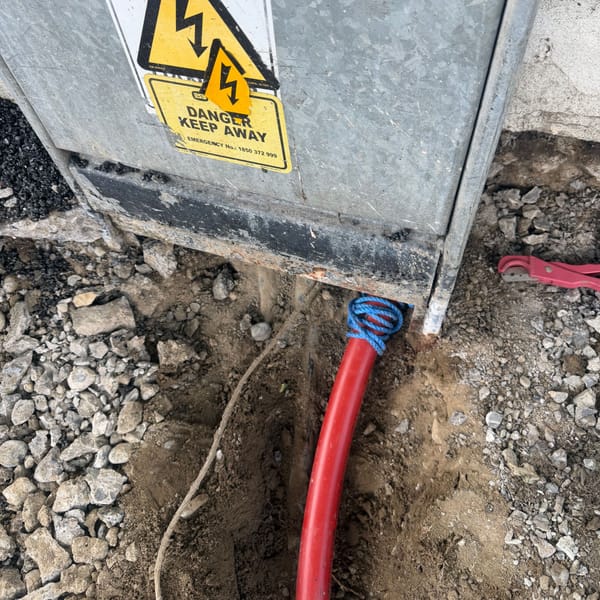
Civils for LV and MV cable routes, connections and supplies: trenching, duct formations, joint bays, pillar bases and reinstatement.
ExploreSub-duct, new duct, chambers and reinstatement for fibre-to-the-building and broadband rollouts.
ExploreDuct routes, chambers and civils for data-centre connections, on secure sites and the roads leading to them.
Explore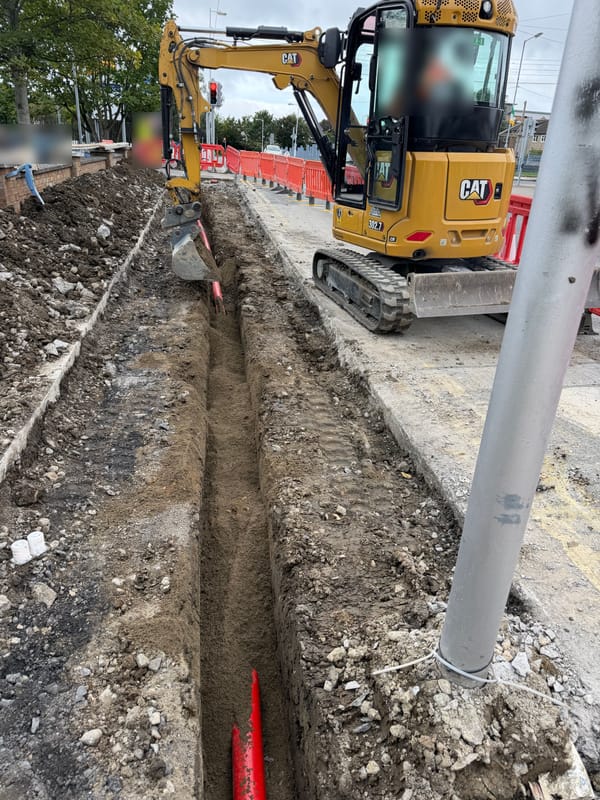
Civils for lighting upgrade programmes: column bases, column removal and installation, ducting, chambers and footpath reinstatement.
Explore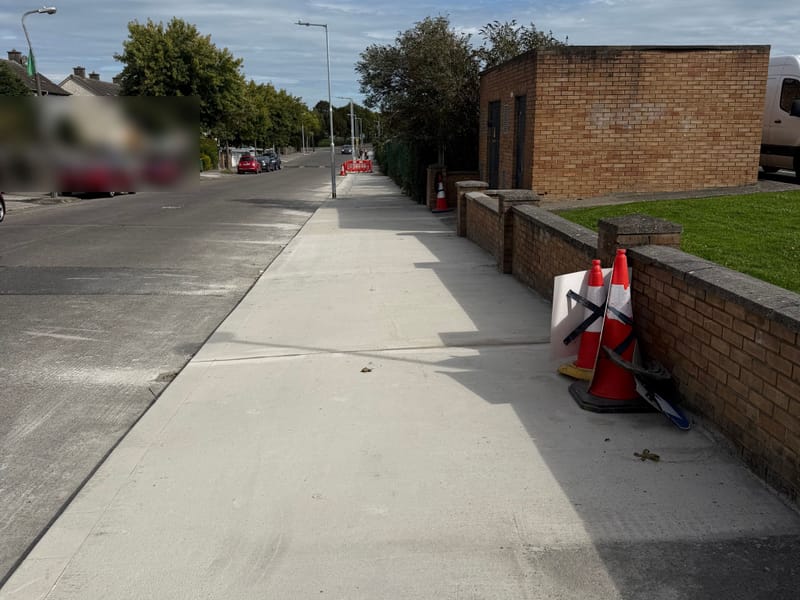
Concrete reinstatement after water-network excavations, measured and photographed at each site.
Explore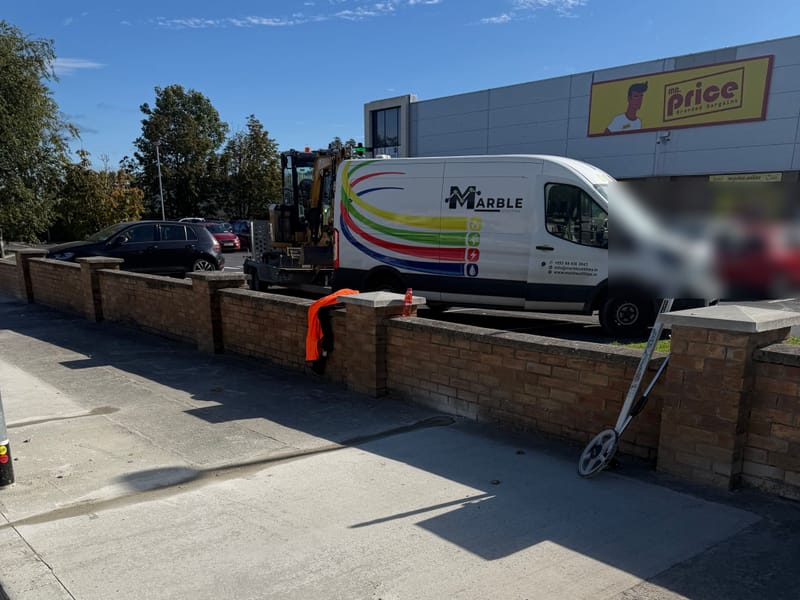
Utility ducting, chambers and reinstatement for business parks, industrial estates, retail parks and new housing.
ExploreOur work
Customers we work for
Services
Open-cut trenching, duct formations, joint bays, chambers, cable protection and reinstatement for LV and MV cable routes.
Sub-duct installation in existing ducts, blockage clearance, new duct and chambers, fibre cable installation and reinstatement for fibre networks and data-centre connections.
Breakout, column bases, column removal and installation, ducting, junction-box chambers and reinstatement for lighting upgrades.
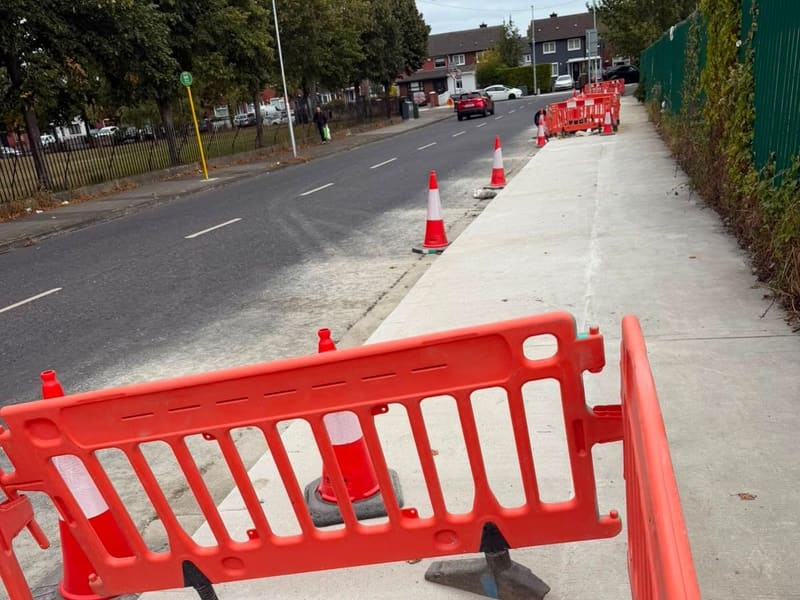
Breakout and reinstatement of footpaths, kerbs, paving and driveways after utility works, measured and photographed.
Delivery
Dig line and reinstatement extent agreed on the ground
Saw-cut and break out the agreed area
Buried services located before digging
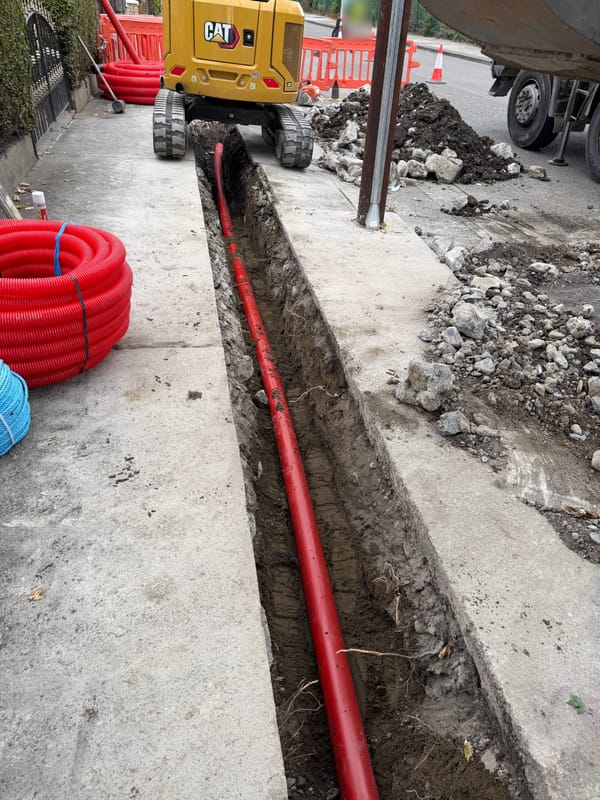
Ducts, sub-ducts, chambers and column bases
Compaction checked and photographed
Temporary or permanent surface
Photographs and measurements
03 · Excavate
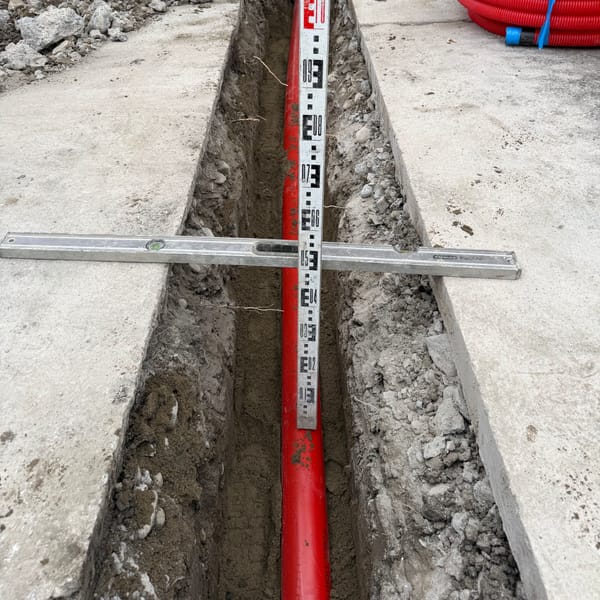
04 · Duct, depth recorded
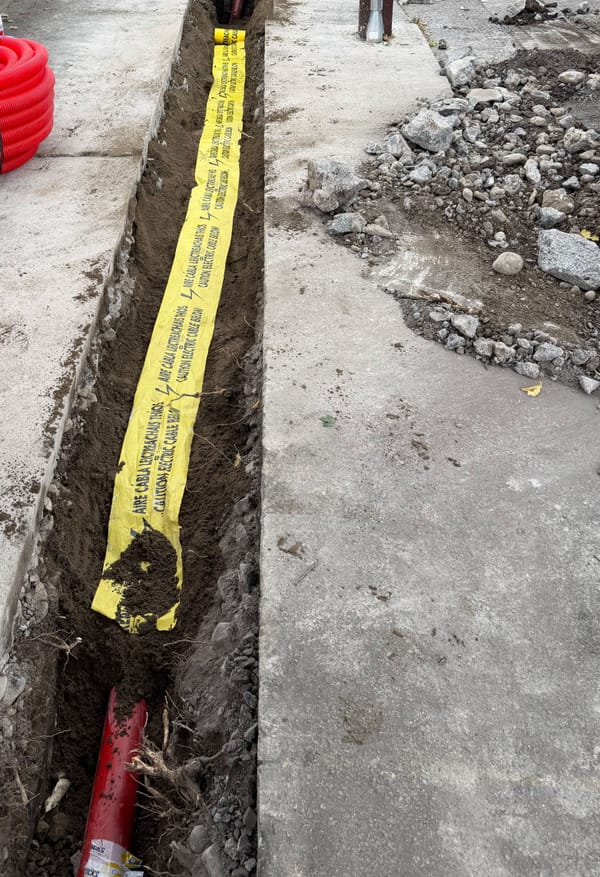
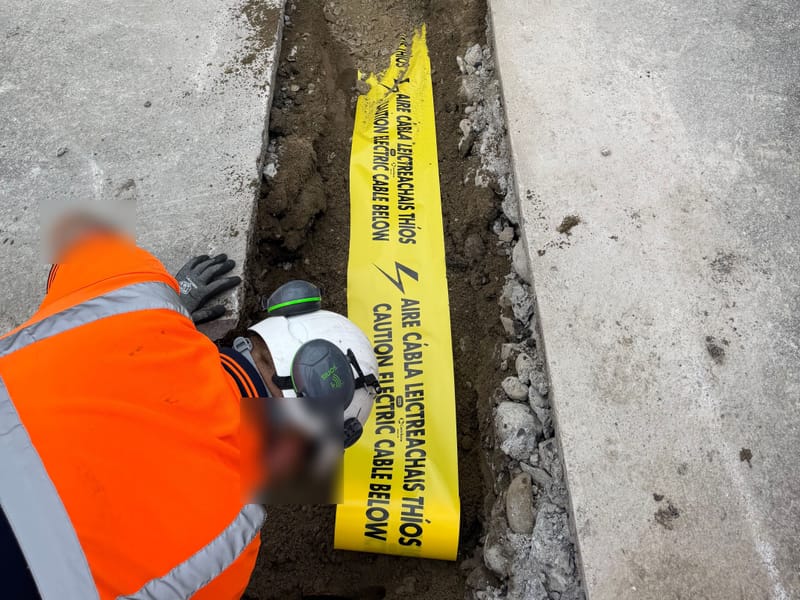
05 · Backfill and warning tape
06 · Reinstate
Records and handover
Every location is recorded as its own job while the work happens: what was there before we started, how deep we dug, how the backfill was compacted, and what we left behind.
Measurements are taken by surface type, so a quantity surveyor can trace each figure. Defects are logged against the location and closed out with photographs.
Location record
One per location
Checked before issue and handed over with our valuations.
Approach
Before a street starts, we walk it with the road authority and the main contractor to agree the line of the dig and the extent of reinstatement. The agreed bays are marked on the ground.
Each activity has its own risk assessment and method statement, briefed to the crew before work starts. Each job has a temporary traffic management plan to Chapter 8.
We keep to the road-opening licence: its hours, notices and conditions. Every opening is reinstated or made safe before the working window closes.
Photographs and measurements are taken as the work happens, checked, and handed over with our valuations, so quantities can be agreed from the record.
Safety and quality
The streets we work in have residents, parked cars, pedestrians and live cables. These are the controls we use on every job.
Service drawings checked, and the dig line scanned with a cable locator and signal generator, before excavation.
A risk assessment and method statement for each activity, briefed to the crew before work starts.
Plant checked by the operator before use each day and inspected weekly by a competent person.
A site safety folder in every crew van, with the method statements, plant certificates, training records, emergency details and traffic plan for the job.
Contact
Tell us where the work is, what it involves and when it starts. We will come back to you to talk it through.