
Service
Power cable trenching and ducting
Civils for low- and medium-voltage cable routes in roads, footways, verges and fields. We open the trench, lay the duct formation to the network operator’s specification, build the joint bays and chambers, prove the ducts, place the cable protection and reinstate the surface, ready for the cable crew.
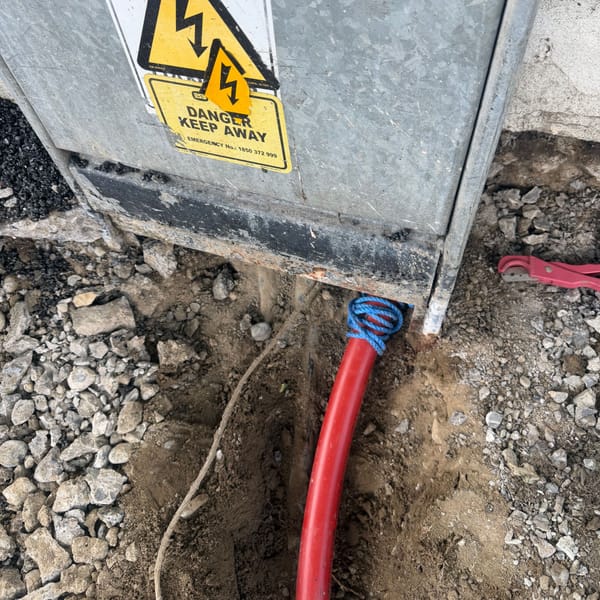
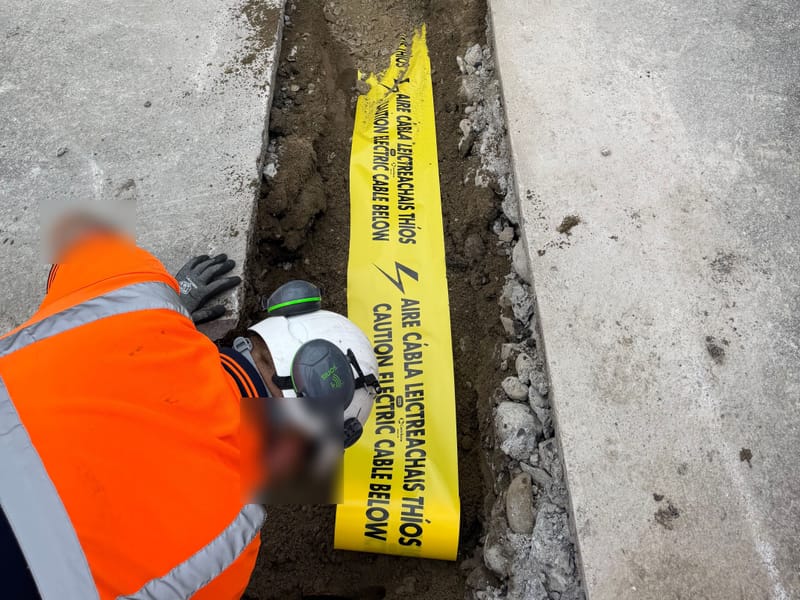
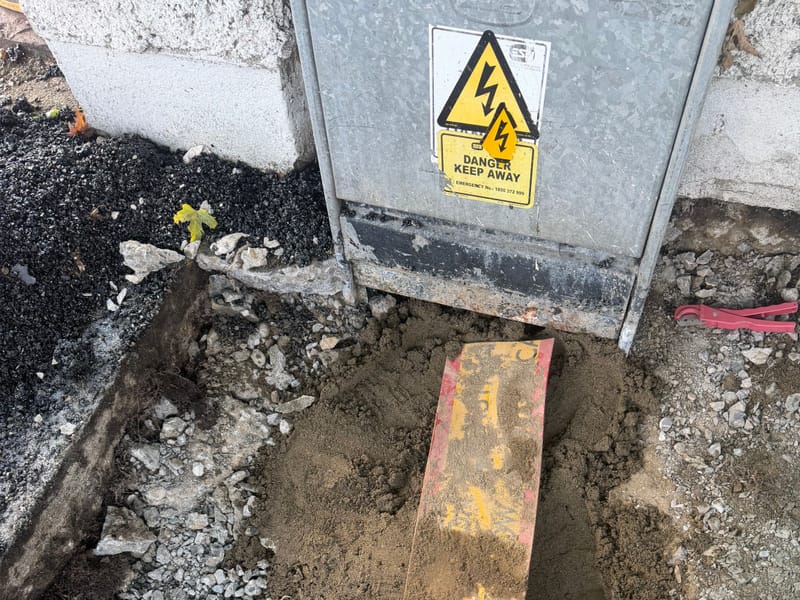
Scope
Work included
- Trial holes and slit trenches to locate existing services and prove the route
- Open-cut trenching in carriageway, footway, verge and field, with earthwork support where the depth needs it
- Single and multi-way duct formations, bedded, surrounded and backfilled to specification
- Joint bays and cable chambers, precast or cast in place
- Feeder pillar and mini-pillar bases and duct entries
- Duct cleaning and proving, with draw ropes left in place
- Cable protection: warning tape, marker strip and cable tiles
- Road crossings and ducts under entrances
- Compaction testing, and temporary and permanent reinstatement
- LV and MV cable pulling, where the client and network operator approve it
Where customers use it
- New connections and network reinforcement on electricity networks, delivered with main contractors.
- Supplies to public lighting, feeder pillars and street furniture.
- Connections for data centres, commercial sites, industrial estates and new developments.
- Cable routes across verges and fields for generation and grid connection projects.
Interfaces
Scope boundaries
- Cable jointing, termination, testing and energisation are carried out by the network operator or its electrical contractor. We provide the civils around them, including joint bays and jointing pits.
- We do not install or handle cables at 38kV and above.
- Horizontal directional drilling and moling are carried out by specialist partners and managed within our programme.
- Route design, network approvals and the cable specification come from the client and the network operator.
Delivery
How we deliver it
Work to the network operator’s specifications, cross-sections and safety rules, with its inductions completed before work starts.
Before excavation, services are located with a cable locator and signal generator and confirmed by trial holes.
Ducts are proved and their position and depth recorded before backfill.
Every opening has a temporary traffic management plan to Chapter 8 of the Traffic Signs Manual and follows the guidelines for managing openings in public roads.
Handover
What you receive at completion
- Photographs of each section: open trench, duct formation, cable protection and finished surface.
- Duct lengths, depths and positions, with duct proving records.
- Joint bay, chamber and pillar locations.
- Defects recorded against the location and closed out with photographs.
Evidence
Related work
Contact
Discuss a power cable trenching and ducting project
Tell us where the work is, what it involves and when it starts. We will come back to you to talk it through.